
WASHINGTON — Tensions between the United States and Iran intensified Sunday as both sides exchanged accusations over military activity in and around the strategically vital Strait of Hormuz, raising fresh concerns about global energy supplies and the risk of a wider regional conflict.
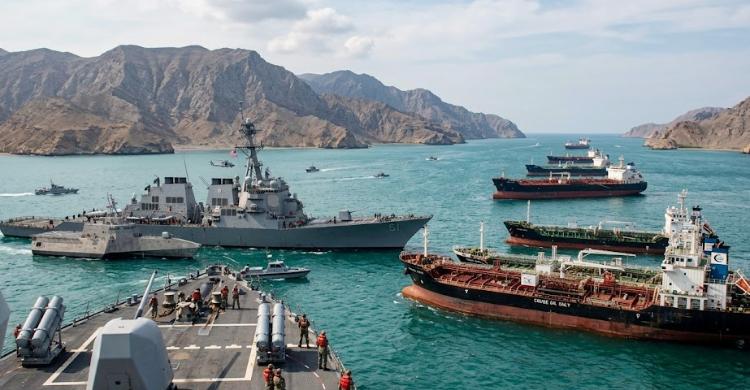
Iran claimed it had attacked an unmanned U.S. vessel attempting to enter the Strait of Hormuz. The U.S. military rejected the claim, calling it false. The dispute came after U.S. forces reportedly struck three Iranian oil tankers, marking another sharp escalation in the confrontation.
The Strait of Hormuz is one of the world’s most important energy chokepoints, making the latest confrontation particularly significant for American consumers and the global economy. Any prolonged disruption to shipping through the waterway could put additional pressure on oil prices and fuel costs.
The confrontation has also become an economic battle. Washington has increased sanctions and military pressure on Tehran, while Iran continues to use its position around the Strait as leverage. Iranian officials have warned that further U.S. attacks could trigger a stronger response.
For the Trump administration, the escalating standoff presents a difficult strategic challenge. Washington must balance military pressure on Iran with the potential economic consequences of a prolonged disruption to energy shipments.
The latest developments come as the administration is also pursuing diplomatic efforts in other major conflicts. U.S. envoys Steve Witkoff and Jared Kushner arrived in Kyiv on Sunday after meeting Russian President Vladimir Putin in Moscow as part of renewed efforts to end the Russia-Ukraine war.
With tensions rising in the Middle East and diplomatic efforts continuing over Ukraine, the Trump administration faces growing pressure on multiple foreign-policy fronts.
For Americans, however, the most immediate concern may be economic: how long the Strait of Hormuz confrontation lasts and what it means for oil, gasoline prices and inflation.